
In particular, nonferrous molten metal (such as aluminum or zinc) is poured into a metal mold and allowed to solidify before being removed.
Because individual castings can have a wide range of specifications depending on the final application for which they are intended, it is necessary to modify the die casting services process in order to achieve a variety of results.
Even though gravity die die casting services does not provide the same advantages as high-pressure die casting, the slower rate at which molten metal is introduced into the mold will result in significantly less folding and turbulence in the finished product as a result of the slower rate at which molten metal is introduced into the moldConsequently, the custom die casting contains less air, which is a significant advantage if the custom die casting is subjected to additional heat treatment at a later point in its life.
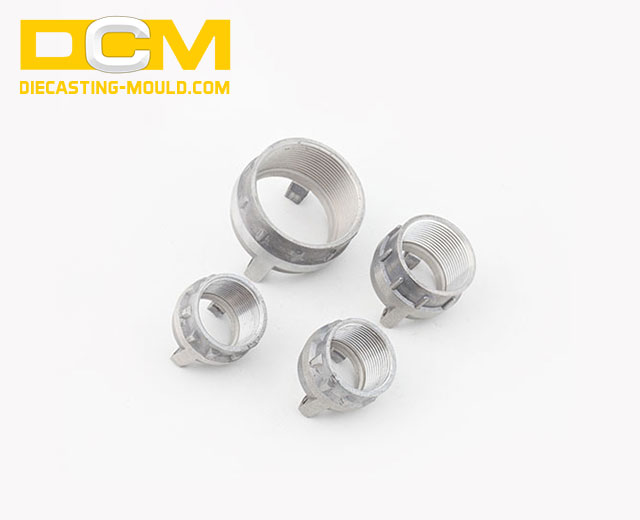
Even if a casting is extremely heavy, it is only its surface area that is important, rather than the total weight of the die casting services itself. The size of the die casting aluminum machine required to manufacture a part is determined by a number of factors, including the surface area of the part, the length of the runner, and the amount of venting that is required. A similar force applied to this surface corresponds to the force that must be overcome by the aluminum die castings machine in order for metal to be successfully injected into a mold while the zinc die casting process is being carried out.
To successfully manufacture this mold, zinc castings is also necessary to determine the amount of metal pressure that will be applied during the manufacturing process. In most cases, metal pressures between 10,000 and 12,000 pounds per square inch (PSI) will be used to produce the castings, according to expectations.
We can calculate the amount of tonnage required to cast this eight cavity design by multiplying the metal pressure by the projected area of the cavity.
You can get an estimate of the amount of machine tonnage that will be required for this job if you multiply the projected parting line area times the metal pressure and divide the result by 2000.
Therefore, a machine capable of handling (214.6*10,000)/2000 = 1073 tons, or a machine capable of handling 1000 tons, is required for this particular design.
As part of the quoting process, the die caster will perform a cost analysis in order to determine the most cost-effective solution for the customer based on the customer's current machinery.
Increased cavity count on a piece of equipment almost always results in a lower piece price, which in turn results in a lower total cost of the project as a whole. In contrast, increasing the overall machine size can have a significant impact on the economics of the operation.
A wide range of die zinc alloy die casting machines with capacities ranging from 400 to 1000 tons are commonplace throughout the industry. An uncommon type of machine that can produce tonnages ranging from 1200 pounds per hour to 4500 pounds per hour and is used in high-volume automotive production, this machine is less well-known. The cost of purchasing and operating machines in the same price range ranges from 1200 to 4500 is significantly higher when compared to the cost of purchasing and operating machines in the same price range ranges from 1200 to 4500. It was used to manufacture large castings such as engine blocks and transmissions on the majority of these machines, which had been purchased specifically for the purpose of producing large castings such as engine blocks and transmissions. It is possible to create a 50 cavity die for your part that will allow it to be cast on a 3000 ton machine; however, these dies are typically reserved for large, high-volume castings and are therefore more expensive as a result.