Have you ever sat down to unearth the lowdown in relation to Non-Domestic Energy Performance Certificate Assessors just to find yourself staring google eyed at your computer screen? I know I have.
Energy Performance Certifications (EPCs) are part of a European drive to reduce emissions and tackle climate change. Since 2008 all properties when sold, built, or rented need to have an Energy Performance Certificate. Larger public buildings need to display a Display Energy Certificate (DEC). The EPC rating should definitely play a part when deciding whether or not to buy a property. If it’s pretty bad, but you love other aspects of the home, you could always apply a bit of elbow grease and make improvements (if you can afford them). Using an Energy Performance Certificate (EPC) is an effective way to find out how energy efficient your Commercial (Non-Domestic) building really is. Not only can you use this information to help you make any necessary changes, but it can also help you get the best deal when you’re shopping around for your commercial property needs. Here’s more information about EPCs and why you should use them when looking to buy or rent out commercial buildings in the UK. Owners and landlords that plan to sell or rent out residential real estate are obliged to provide a domestic energy performance certificate for potential buyers or tenants. Government policies targeting net zero emissions by 2050 bring sharp focus to both the purpose of, and projected changes to, MEES requirements. The property industry has a significant role to play in reducing carbon emissions and maximising energy efficiency to tackle climate change, and MEES constitute an energy efficiency strategy designed to steer collective action. The Minimum Energy Efficiency Standard (MEES) Regulations set a minimum energy efficiency level for domestic private rented properties. The regulations were first announced in 2015 and came into effect in 2018, forcing landlords to make energy efficiency and emissions performance improvements to their properties.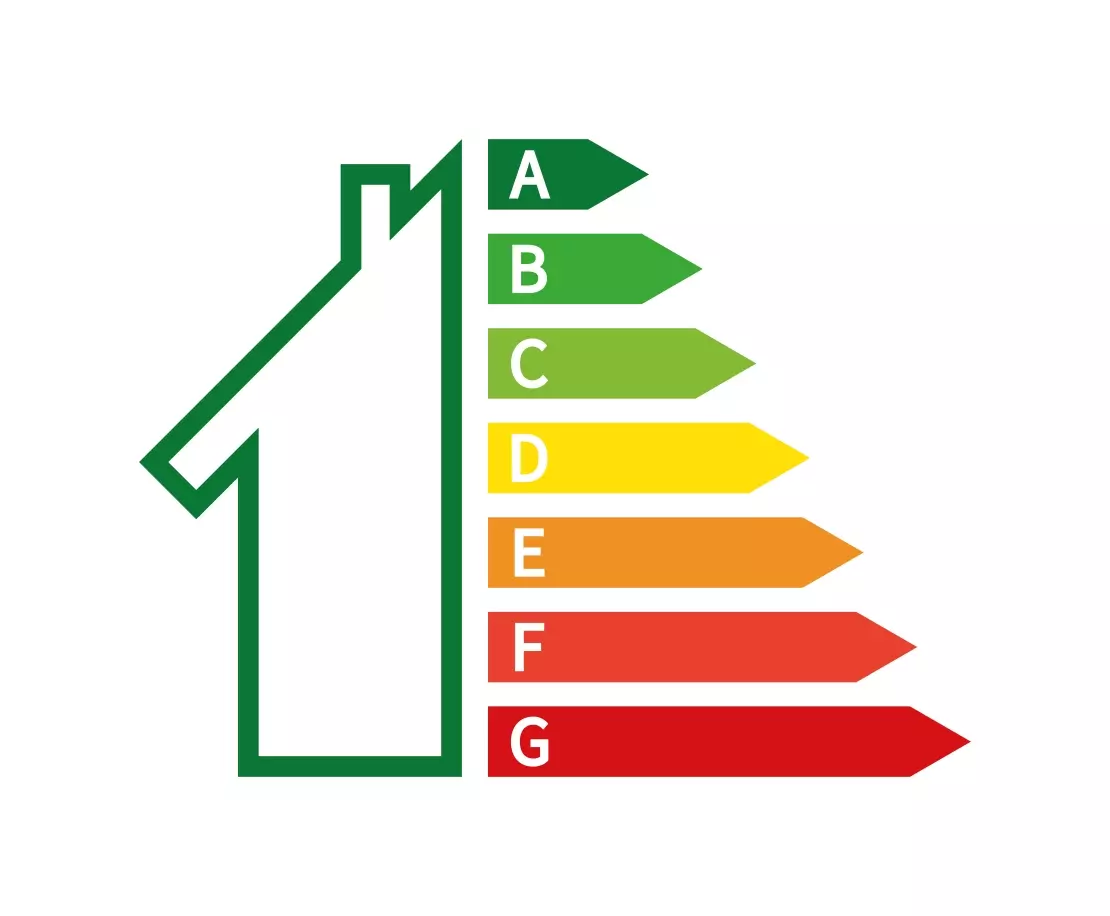
For Public Buildings of a certain size which are occupied by public authorities, Display Energy Certificates are a requirement showing the buildings operational rating and how efficiently the building is being used in terms of energy saving measures. The sort of client who cares about the energy efficiency of a home is the sort of tenant that most landlords will want to attract – while it may show the tenant has green credentials, it can also show that the tenant is considering their long term financial situation by gauging how expensive the bills may be. So, if a house has a good (or even average) EPC rating, it would be fair to say that there is an associated weighted factor of influence in terms of the occupant.A The building’s owner or landlord is responsible for obtaining an EPC from a qualified EPC surveyor when they choose to sell or let their property. An EPC is also required for new builds and significant modifications to the heating, air conditioning or mechanical ventilation systems. The property owner or landlord is also responsible for ensuring their property complies with the MEES requirements. A qualified Energy Assessor is required to establish the property's energy efficiency. For the EPC to work and be valid, you need a competent person. Otherwise, it won't be valid. Do your research about non domestic epc register before entering into any long term transactions.
Access To EPCs
Energy Performance Certificates are valid for 10 years, so it can be used for property sales at any point during the 10 year period. If you’ve spent time working on your home to improve its energy efficiency, then you may consider having another EPC survey completed before the 10 years is up to understand how your improvements have increased the rating on your property’s Energy Performance Certificate (EPC). Before properties can be marketed for sale or rent, they need a valid EPC and it must be less than ten years old. If there is no valid EPC, the landlord will need to commission one. EPCs must be produced by an accredited assessor, but landlords are free to seek accreditation for themselves and their employees and so become competent to certify their own properties. Your EPC should be produced by a certified Energy Assessor. They must be adequately trained and hold membership with one of the Government approved certification providers, such as Stroma Certification. The energy assessor will conduct a visual inspection of your property to produce the EPC. They will use a specialist software platform (such as our RSAP+ software) on a phone or tablet to take measurements and photographs of each room. An EPC rating is a review of a property’s energy efficiency and is primarily of interest to would-be buyers (you) or renters (your tenants) to quickly see how much their energy bills will cost in their new house or flat. An understanding of the challenges met by epc commercial property can enhance the value of a project.Buildings are rated from 'A' to 'G'. 'A' means the building is very efficient and is coloured green on the chart. 'G' means it is inefficient and is coloured red on the chart. Properties with a higher rating are likely to have lower fuel bills. If you are renting or selling your property as of the 1st of October 2008 you will require an energy performance certificate also known as an EPC. This is required before marketing of your property can commence. The EPC lasts 10 years and is carried out by one of our accredited energy assessors. This certificate is fully compliant and can be used with any estate agent. When an assessor visits your home to calculate your EPC rating, they will spend time examining features such as your windows, roof insulation and lighting. Points are scored for each energy efficient measure your home has. After the assessor’s inspection, they will use software to work out the energy rating for the property and to produce the certificate. To achieve a top A rating, you’d need 92-100 points, whereas the least efficient homes with a G rating would have between 1-20 points. Commercial property experts are on hand to deal with any questions you might have about MEES and the upcoming changes. They can review your existing leases to work out whether improvements can be made (or which party would be responsible for the costs of these). They can also advise you about MEES issues in future leases. It is possible that MEES could be upgraded in the future, as the expectation for higher standards increases. As such, it makes sense to fully commit to ensuring your property not only meets expectations, but exceeds them, ready for any future change. A service such as a mees regulations is an invaluable asset in the heady world of business.
How Can I Find An Existing Epc Certificate?
Most buyers these days will know the financial implications of buying a property with a lower EPC rating and it’s very possible in the future that taxes and benefits will be increasingly tied to a property’s EPC, making the cost of reducing the carbon emissions a factor that should be considered when buying. It is also worth noting that since April 2012, an EPC rating of band D or higher has been needed if you want to have solar panels installed and receive the standard rate from the ‘Feed-in Tariff’. It has been a legal requirement to obtain an EPC for commercial properties for over a decade. Failure to obtain a valid EPC certificate may lead to a financial penalty between £500-£5,000. It’s worth noting that there are some exemptions that apply for commercial properties including certain listed properties, places of worship or temporary buildings. If your property doesn’t already have an EPC you’ll need to get one before you can sell it or let it out. Many people choose to get an EPC through their estate agent for convenience. But this is generally the pricier option. Don’t forget to negotiate or save yourself the hassle by arranging your own EPC independently; you can do this by finding local Energy Assessors in your area. To carry out an EPC assessment properly, the assessor will access every part of the property and check things like how much insulation there is, the size and construction type of the property, the heating and lighting systems, and ventilation. All properties with an EPC in England, Wales and Northern Ireland have an EPC registered with the Ministry of Housing, Communities and Local Government’s (MHCLG) Energy Performance of Buildings Central Register. If your property is in Scotland, you can find a copy on the Scottish Energy Performance Certificate Register, or the Energy Saving Trust’s website. Conducting viability appraisals with respect to mees is useful from the outset of any project.Energy performance certification is a key policy instrument that can assist governments in reducing energy consumption in buildings. It provides decision makers in the buildings industry and the property marketplace with objective information on a given building, either in relation to achieving a specified level of energy performance or in comparison to other similar buildings. Too often, commercial buildings are not energy efficient enough to meet the new legal standard for minimum energy efficiency. Not only is this a waste of energy and money, but it can also have adverse consequences for the long-term health and safety of your property. Your business will need an EPC if you own a commercial property and you either rent it out or want to sell it. You will also need one if this property is undergoing construction or significant changes are made to the building, such as the installation of a new heating system. An EPC will relate to a single dwelling, so if a building is converted such that it will contain more, or fewer, separate dwellings than before, a new EPC will be required in relation to each new self-contained dwelling. A Commercial EPCs will be required upon construction, sale or lease for all non-dwellings, covering everything from small retail units to offices, industrial units and large scale commercial premises such as airports and public buildings. Responsibility for enforcement in newly built properties will fall to Building Control, whilst Trading Standards departments will enforce certification of existing buildings. There are multiple approaches to facilitating a commercial epc in the workplace.
The Standard Assessment Procedure
EPC costs might vary, so seek an estimate first. The assessor can provide you a price estimate so you'll know just how much it will cost. In the assessment market, there are a variety of pricing options. With a little research, you may locate a price range that fits your budget. If you are a residential homeowner, commercial property owner or a landlord, looking to sell, rent or lease your property, you are now required by law to possess an energy performance certificate (EPC). The Dynamic simulation model is a software tool that models energy inputs and outputs for different types of building over time. In certain situations, the simplified building energy model methodology may not be sophisticated enough to provide an accurateassessment of a building’s energy efficiency. In these cases government approved proprietary dynamic simulation Models may be used. One can uncover further info relating to Non-Domestic Energy Performance Certificate Assessors on this UK Government Portal article.Related Articles:
Background Findings About Commercial Energy Performance Certificate AssessorsBackground Insight With Regard To Commercial EPC Contractors
Background Findings About Non-Domestic Energy Performance Contractors
Background Insight With Regard To Accredited Commercial Energy Assessors
More Background Insight About Non-Domestic Energy Performance Contractors
Additional Information About Commercial Energy Performance Contractors
More Background Insight With Regard To Qualified Domestic Energy Assessors