
Therefore, the following section provides a high-level overview of the machining process for Precision Mechanical Parts in order to make this process more understandable to those who are unfamiliar with the subject matter.
It has been divided into three sections for the sake of readability.
An examination of the parts' appearance and processing requirements must be performed prior to each processing stage in order to determine whether or not the parts are suitable for that stage. According to the authors' recommendations, the preliminary analysis should be carried out in accordance with the overall processing requirements of the study.
Before the design process can begin, it is necessary to conduct a thorough examination of the product. It is possible that this examination will include an examination of the seal's manufacturing process and other factors. Before we can begin working on the project, we must first decide on the font, text size, seal type, and other aspects of the product that will be used, as well as the colors that will be used. Consider the following scenario for the purpose of providing an illustration:
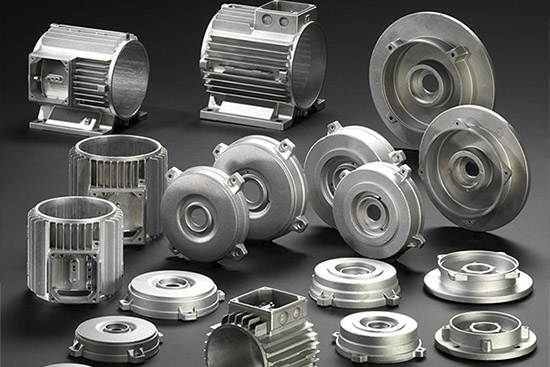
It is necessary to plan the process with the help of software. After that, the tool path is optimized by adjusting the parameters as neccessarily. In order to create an optimal tool path, two steps must be completed: first, we must plan the process using software, and second, we must optimize the tool path by adjusting parameters as needed.
Why is it necessary to manufacture CNC machining partscomponents with a high degree of accuracy, and what are some of the factors that contribute to this requirement? After all, if CNC machined components must be extremely accurate in their manufacture, why is it necessary for them to be manufactured with a high degree of precision? The effectiveness of CNC machined components depends on their ability to be manufactured with high levels of precision. Therefore, it is reasonable to ask why the level of precision required by CNC-machined components must be so high in comparison to other types of components. To understand why such a high level of precision is required in the first place, it's necessary to go back to the beginning.
In some cases, by reducing the number of components required to make a device function to the absolute bare minimum, the overall size of the device can be reduced. A system's performance and efficiency are improved by shrinking the system's size, which occurs as a result of shrinking the system's size.
However, despite their small size, micro parts are highly sought after in a wide range of industries. These industries include medical devices and electronics, as well as the manufacturing of energy-related components, to name a few examples. Increasing demand for CNC parts manufacturers is expected in the not-too-distant future, as will the demand for machine tools that are capable of performing CNC machining operations. Manufacturers of CNC parts will be responsible for cutting durable parts into precise sizes and ensuring that they function properly when integrated into larger systems, according to the plan.
The following factors must be taken into consideration when attempting to gain market share in today's competitive environment: product miniaturization, powerful functionality, parts replacement, high-productivity assembly and commissioning, and encouraging automation in manufacturing and assembly processes.